

Table of Contents
- What Makes a Great Organic Loose Leaf Tea Brand?
- Quick Comparison: Best Organic Loose Leaf Tea Brands
- 1. Avrum Earl Grey: Best Timeless Classic
- 2. Avrum Jasmine: Best Floral Green Tea
- 3. Avrum Matcha: Best for Mindful Rituals
- 4. Avrum Hojicha: Best Roasted Green Tea
- 5. Avrum Masala Chai: Best Bold Spiced Blend
- 6. Avrum English Breakfast: Best Everyday Black Tea
- How to Brew Loose Leaf Tea for the Best Flavor
- How to Choose the Best Organic Loose Leaf Tea
- Storage Tips for Freshness
- Frequently Asked Questions
Last Updated: September 28, 2026
What Makes a Great Organic Loose Leaf Tea Brand?
The best organic loose leaf tea brands share three traits: certified organic sourcing, whole-leaf tea rather than dust and fannings, and packaging that protects the leaf from light and air.
- Certification you can verify. USDA Organic and Fair Trade labels are the two most common standards.
- Whole leaf, not broken leaf. Grades like OP and FOP tell you what you are buying.
- Freshness and storage. Loose leaf holds its flavor far longer than bagged tea when stored away from heat and light.
- Range. A brand that only does one style rarely does all of them well.
USDA Organic certification standards
Quick Comparison: Best Organic Loose Leaf Tea Brands
| Tea | Type | Flavor Profile | Best For | Price |
|---|---|---|---|---|
| Earl Grey | Black | Orange, floral, malt | Classic citrus black tea | $20.99 |
| Jasmine | Green | Sweet, smooth, floral | Floral green tea drinkers | $20.99 |
| Matcha | Green powder | Refined, lingering | Traditional preparation | $20.99 |
| Hojicha | Roasted green powder | Toasted cereal, umami | Low-bitterness green tea | $20.99 |
| Masala Chai | Spiced black | Bold, aromatic, intense | Milk-based chai | $20.99 |
| English Breakfast | Black | Rustic, sweet, strong | Everyday morning cup | $20.99 |
1. Avrum Earl Grey: Best Timeless Classic
Earl Grey is the tea most people know, and the easiest to get wrong. Cheap versions lean on artificial bergamot and taste like perfume.
Tea Association of the USA brewing guidance
2. Avrum Jasmine: Best Floral Green Tea
Jasmine quality comes down to how the flowers are handled. Many commercial versions use sprayed flavoring; better ones layer real blossoms with the leaf.
3. Avrum Matcha: Best for Mindful Rituals
Matcha is the one tea you do not steep. Whisking is the point, and quality shows up in the texture.
4. Avrum Hojicha: Best Roasted Green Tea
Hojicha solves a problem most green teas create: bitterness. Roasting the leaves and stems changes the character entirely.
5. Avrum Masala Chai: Best Bold Spiced Blend
Chai is a method as much as a tea: the blend must survive milk, sugar, and spice without disappearing. Avrum's Masala Chai is full-bodied, aromatic, and intense, working simmered with milk and sugar or as a plain cup when you want spice without sweetness.
6. Avrum English Breakfast: Best Everyday Black Tea
English Breakfast is the tea most people drink without thinking, which is why it is hard to do well. It has to be simple and strong.
How to Brew Loose Leaf Tea for the Best Flavor
Brewing loose leaf tea well comes down to four variables: water temperature, leaf quantity, steeping time, and water quality. Get them right and most teas beat their bagged equivalents; get them wrong and even an expensive leaf turns bitter or flat.
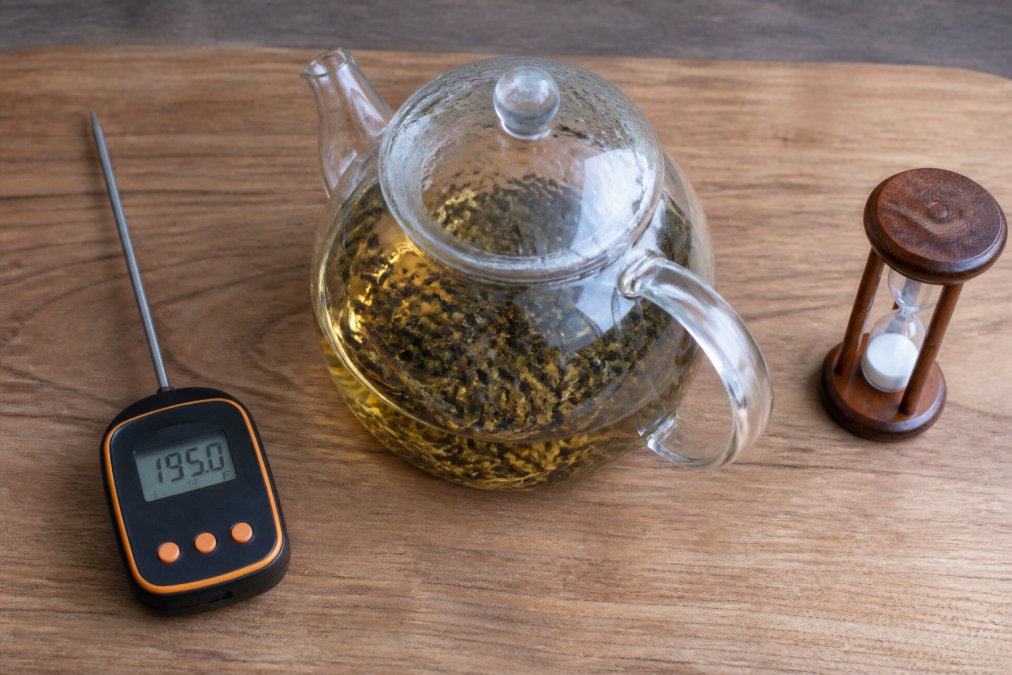
Why the variables matter
Tea leaves release three compound groups at different rates. Amino acids and caffeine come out first, giving sweetness and lift. Polyphenols (tannins) come out more slowly, giving body and astringency. Aromatic oils are volatile and destroyed by water that is too hot.
Water temperature and steeping time guide
Use this as a starting point, then adjust to taste:
| Tea type | Water temperature | Leaf per 12 oz | Steep time | Notes |
|---|---|---|---|---|
| White tea | 175-185°F | 2-3 g | 3-5 min | Most delicate; coolest water |
| Green tea (Chinese) | 175-185°F | 2-3 g | 2-3 min | Lower temp protects the aromatics |
| Green tea (Japanese) | 160-175°F | 2-3 g | 1-2 min | Even cooler; sensitive to heat |
| Oolong | 185-205°F | 3-5 g | 3-5 min | Higher temp for rolled oolongs |
| Black tea | 195-205°F | 2.5-3 g | 3-5 min | Full boil is fine for most |
| Pu-erh | 200-212°F | 5-7 g | 30 sec-1 min | Built for multiple short steeps |
| Herbal / tisane | 212°F | 3-5 g | 5-7 min | Needs full boil to extract |
| Matcha | 160-175°F | 1-2 g | Whisk, no steep | Sift first to avoid clumps |
| Hojicha (powder) | 175-195°F | 2 g | Whisk or steep briefly | Roasted, low bitterness |
Water quality is half the cup
Tea is roughly 99% water, so water matters. Filtered water removes chlorine and flat-tasting minerals. Soft water extracts flavor more evenly than hard water, which leaves scum and mutes aromatics. Distilled water has no minerals, so the cup tastes thin. A simple carbon filter is enough for most kitchens.
Multiple steeps: the loose leaf advantage
Whole leaf tea is built to be steeped more than once. After the first steep the leaf is hydrated, so later steeps need less time and often slightly higher heat:
- First steep: full time, full temperature
- Second steep: add 15-30 seconds, or raise the temperature by 5°F
- Third steep and beyond: add another 30 seconds each time
Common brewing mistakes
- Boiling water on green tea. Turns it bitter and grassy in the wrong way.
- Steeping by color instead of time. Tea darkens before it finishes extracting; taste, don't look.
- Squeezing the leaf. Releases extra tannins. Let it drain.
- Reusing wet leaf the next day. It oxidizes and tastes stale. Steep it out the same session.
- Ignoring the water. If your tap water tastes off, your tea will too.
How to Choose the Best Organic Loose Leaf Tea
Choosing well comes down to reading the label and the leaf, not the packaging. Four things separate a brand worth buying from one that just prints "organic" on the pouch: certification, sourcing model, leaf grade, and honest claims.
Certification: what the labels actually mean
USDA Organic is the standard most US buyers recognize. To carry it, tea must be grown on land free of prohibited synthetic pesticides and fertilizers for at least three years before harvest, with annual inspection by a USDA-accredited certifier. Imported organic tea meets the same standard through a recognized certifying body at origin.
USDA Organic certification standards Fairtrade International standards
Sourcing model: single-origin, direct trade, and blends
Single-origin tea comes from one garden, estate, or region, so flavor reflects a specific place and harvest, a first-flush single-estate Darjeeling tastes nothing like the same garden's autumn pick.
Leaf grade: reading the abbreviations
Abbreviations like OP (Orange Pekoe), FOP (Flowery Orange Pekoe), and TGFOP (Tippy Golden Flowery Orange Pekoe) describe leaf size and tip proportion, not quality on their own. A well-made OP can beat a poorly handled TGFOP.
- SFTGFOP, Special Finest Tippy Golden Flowery Orange Pekoe, the top of the conventional scale
- FTGFOP, Finest Tippy Golden Flowery Orange Pekoe
- TGFOP, Tippy Golden Flowery Orange Pekoe
- FOP, Flowery Orange Pekoe
- OP, Orange Pekoe, the baseline whole-leaf grade
- BOP, Broken Orange Pekoe, smaller pieces that steep faster and turn bitter sooner
- Fannings and dust, what most tea bags contain
Claims that are not regulated
- "Pesticide-free" is not a regulated term. USDA Organic is.
- "Chemical-free" is meaningless, water is a chemical.
- "Non-GMO" is largely irrelevant for tea, which is not a genetically modified crop.
- "Natural" on a tea label has no legal definition in the US.
A quick checklist before you buy
- Is the organic claim backed by a named certifier, not just a leaf icon?
- Does the brand state the origin, country, region, or estate?
- Is the grade disclosed, or is it hidden behind a flavor name?
- Is the packaging opaque and airtight, or a clear bag that lets light in?
- Does the brand sell in quantities you can finish before the leaf fades?
Botanicals and tisanes are not tea
Herbal infusions like rooibos, chamomile, and peppermint are sold alongside tea but are not made from the Camellia sinensis plant. They are naturally caffeine-free, and the same organic standards apply, but they usually want boiling water and a longer steep.
Storage Tips for Freshness
Loose leaf tea goes stale like coffee: exposure to air, light, heat, and moisture. Store it airtight, away from the stove and out of direct sun.
Frequently Asked Questions
Are organic loose leaf teas better than tea bags?
Organic loose leaf tea offers a fuller flavor profile and more complex aroma because the whole leaves have room to expand and release their oils. Many conventional tea bags contain broken leaves or dust, which can taste flatter. Loose leaf tea also lets you control the amount you use, so you can adjust brew strength to your preference. Choosing organic means the leaves are grown without synthetic pesticides.
How can you tell if loose leaf tea is high quality?
High-quality loose leaf tea has whole, unbroken leaves with a uniform color and a strong, fresh aroma. Look for visible buds or tips, which indicate careful harvesting. The leaves should feel dry but not brittle. When brewed, the liquor should be clear, not cloudy, and the flavor should be smooth without excessive bitterness. Brands that list the origin and harvest season give you more transparency.
What is the best way to store organic loose leaf tea?
Store your organic loose leaf tea in an airtight container away from light, heat, and moisture. A dark tin or opaque ceramic jar works well. Keep it away from strong-smelling foods like spices or coffee, as tea absorbs odors easily. For matcha and other powdered teas, refrigeration after opening can help preserve freshness, but let the container come to room temperature before opening to avoid condensation.
How do I brew loose leaf tea without a teapot?
You can brew loose leaf tea directly in a mug using a simple infuser basket or a tea strainer. Place the leaves in the infuser, pour hot water over them, and steep for the recommended time. Remove the infuser when done. For a more traditional method, use a small French press dedicated to tea. This gives the leaves room to expand and makes cleanup easy.
Which Avrum organic loose leaf tea is best for beginners?
English Breakfast is a great starting point if you enjoy a strong, familiar cup that works well with milk and sugar. If you prefer something lighter, Jasmine offers a smooth green tea base with floral notes. Both are forgiving to brew and give you a clear sense of loose leaf quality. Avrum's brewing instructions on each package help you get the water temperature and steeping time right.
Choosing a tea brand is really a question of what you want your mornings to feel like. If you want a cup that rewards a few minutes of attention rather than one you drink on autopilot, the leaf has to be good enough to be worth it. Avrum Coffee offers freshly roasted coffee alongside a tea range built on whole leaf and careful sourcing, with Earl Grey, Jasmine, Matcha, Hojicha, Masala Chai, and English Breakfast all at $20.99. Get started with Avrum Coffee and make every cup worth savoring.