

Table of Contents
- What Makes a Coffee Bean Direct Alternative Worth Switching To
- Freshly Roasted Coffee Beans Online: Sourcing Quality Over Convenience
- Single-Origin Coffee Beans vs. House Blends: What Enthusiasts Actually Prefer
- Coffee Roast Date Freshness: The Window That Matters
- Specialty Coffee Subscriptions vs. One-Time Orders: Which Fits Your Ritual
- Roast Levels and Brewing Fit: Matching Beans to Your Method
- Total Cost Comparison: What You're Actually Paying For
- Conclusion: Finding Your Next Coffee Source
- Frequently Asked Questions
Last Updated: October 16, 2026
What Makes a Coffee Bean Direct Alternative Worth Switching To
If you've ordered from the same coffee source for years, switching feels risky, you know what you're getting. But freshness has a window, and it closes faster than you think.
The real difference between a coffee bean direct alternative and what you've been buying isn't flavor, it's control. You're paying for beans roasted days ago, not weeks, plus traceability to the exact farm and processing method.
At Avrum Coffee, freshness and sourcing matter. We focus on single-origin beans and crafted blends, each with a roast date you can trust. Here's what separates a worthwhile alternative from just another retailer.
Freshly Roasted Coffee Beans Online: Sourcing Quality Over Convenience
Freshly roasted coffee beans online are the standard for serious enthusiasts. A bean roasted three days ago versus three weeks ago is the difference between clarity and a flat cup.
How do you know beans are fresh on arrival? The roast date, not "best by" or "packaged on", tells you exactly when they left the roaster.
A common mistake is assuming specialty subscriptions or online sources mean fresh beans. Many retailers roast in bulk, sit on inventory, and ship on demand. Real freshness means roasting to order or shipping within days of roasting.
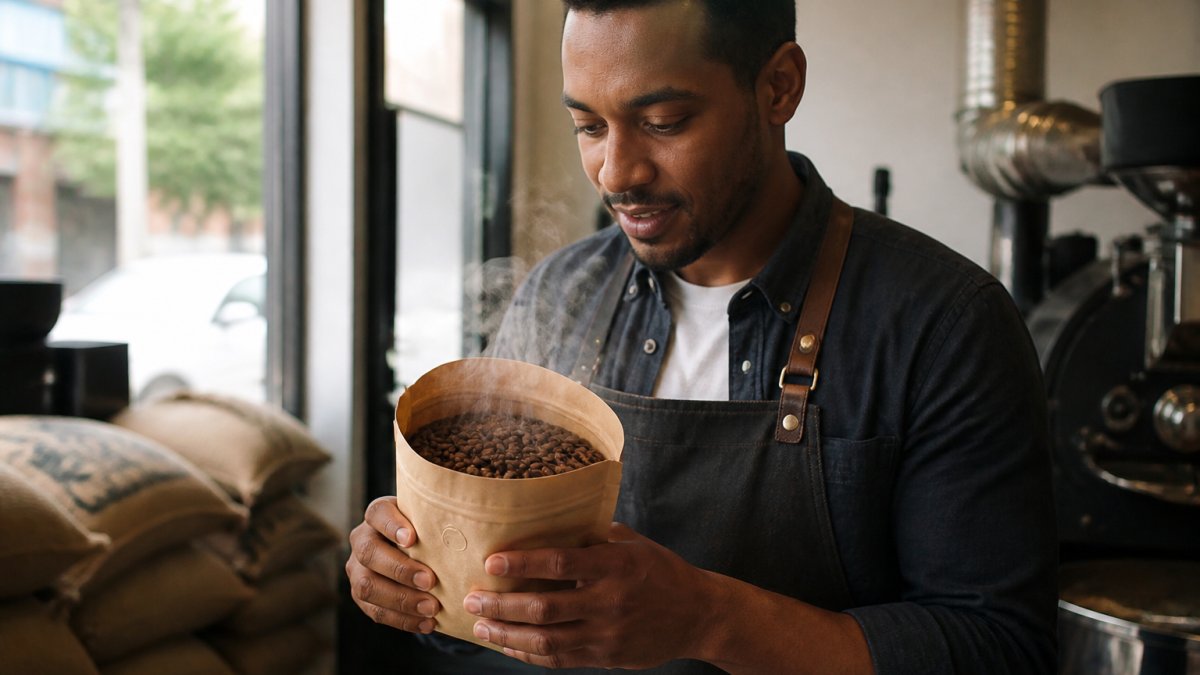
When evaluating a coffee bean direct alternative, ask three questions: When were these roasted? How quickly do they ship? Is the roast date clearly on the bag? If a retailer won't tell you, look elsewhere.
Single-Origin Coffee Beans vs. House Blends: What Enthusiasts Actually Prefer
Single-origin coffee beans come from one farm, region, or cooperative; house blends combine multiple origins. Enthusiasts tend to prefer single-origin for one reason: clarity.
A single-origin bean lets you taste terroir, processing, and the grower's choices rather than blending them out. The Peru single origin in Avrum's Single Origin Favorites Sample Pack shows salted caramel, silky sweetness, and citrus notes thanks to the altitude, soil, and processing used by Cooperativa Agricola de Servicisios Norandino in Piura.
House blends, by contrast, are built to deliver consistency and balance. Avrum's House Blend combines coffees from Central and South America into a smooth, clean cup with nutty and chocolate notes. Blends work when you want reliability. Single-origins work when you want to explore.
Single-origins change seasonally and require experimentation; blends are predictable but less adventurous. Most enthusiasts keep both: a single-origin for focused morning brewing, a blend for easy afternoons.
Coffee Roast Date Freshness: The Window That Matters
Coffee roast date freshness confuses most people. There's no universal standard for how long beans stay "fresh," but there is a window where they taste best.
Days 3-5 after roasting, beans are still off-gassing, bright but unsettled. Days 7-10 are the sweet spot: developed flavors, balanced acidity, a clean, complex cup. After three weeks brightness fades; after a month, the coffee tastes tired.
That's why roast-to-order matters: beans ship at peak freshness instead of sitting in a stockpile for an unknown time.
If your order takes a week to arrive, you want beans roasted the day you ordered, not the day they were packaged, day 7 of their life versus day 14.
Check the roast date on every bag. Retailers who hide it are hiding that their beans aren't fresh.
Specialty Coffee Subscriptions vs. One-Time Orders: Which Fits Your Ritual
Forget "convenience versus control." The real question: which model keeps your beans inside the 7-10 day post-roast window more reliably, and which lets you chase a specific origin when it lands?
Here is the criteria-based way to evaluate both models before you commit.
1. Roast-to-ship timing. Ask whether the roaster uses a fixed weekly cadence or roasts to order. Fixed cadence means beans may sit 3-5 days before shipping; roast-to-order means they ship the day they're roasted. This is the single most important variable.
2. Cadence flexibility. For a daily drinker using 18-20 grams per cup, a 12-ounce bag lasts 17-20 cups, two to three weeks. Biweekly or monthly usually matches consumption better than weekly.
3. Skip, pause, and swap rules. The best subscriptions let you skip a shipment, pause indefinitely, or swap the featured roast for something else in the catalog.
4. Shipping thresholds and discounts. Many roasters ship free above a dollar threshold, and some discount subscription bags slightly. Run the math per ounce, not per bag, since sizes vary (12 oz, 16 oz, 2 lb).
5. Commitment terms. Some subscriptions require a minimum number of shipments. Others are month-to-month. For enthusiasts who like to rotate roasters, month-to-month is almost always the better fit.
When one-time orders win. If you roast your own green coffee, buy small quantities to stay inside the freshness window, or jump on micro-lots the moment they drop, one-time orders give you control a subscription can't. The trade-off: remembering to reorder.
Best Sellers Sample Pack: 6Bean, Cowboy, Breakfast, Peru, Mexico, Bali →
When subscriptions win. If you drink the same style every morning and want to remove the reorder decision entirely, a subscription with roast-to-order shipping and flexible skip rules is the lowest-friction way to stay in fresh beans.
A practical hybrid many enthusiasts use: keep a subscription running for your daily driver blend, and place one-time orders for single-origin micro-lots you want to taste while they are in season. That gives you consistency without giving up exploration.
Roast Levels and Brewing Fit: Matching Beans to Your Method
Roast level and brewing method are not independent choices. They should be paired.
Light roasts bring out the origin characteristics and acidity. They work best with pour-over, AeroPress, or Chemex brewing, where you want clarity and complexity. Medium roasts offer balance between origin flavor and body. They work with any brewing method but shine with pour-over or drip. Dark roasts develop deeper, bolder flavors with lower acidity and more body. They're built for espresso and French press.
Avrum's lineup reflects this logic. The Breakfast Blend is a medium roast from South America, smooth and clean for drip coffee. The 6 Bean Blend is a dark roast designed specifically for espresso. The Peru single-origin is a medium roast that highlights the origin's salted caramel and citrus notes through pour-over or drip.
The mistake most people make is buying based on taste preference alone. A light roast might sound appealing, but if you're brewing with a French press, it won't develop properly. A dark roast might feel safer, but if you're doing a pour-over, you might miss the origin's complexity.
Match your roast level to your brewing method first. Then choose the specific origin or blend based on flavor profile.
Total Cost Comparison: What You're Actually Paying For
Most coffee cost comparisons stop at the sticker price on the bag. That number is nearly meaningless on its own, because bag sizes, shipping thresholds, subscription discounts, and minimum orders all change what you actually pay per ounce and per cup.
Step 1: Normalize to price per ounce. Divide the bag price by the bag weight in ounces. A 12-ounce bag at $18 is $1.50 per ounce. A 16-ounce bag at $22 is $1.38 per ounce.
Step 2: Add shipping, or find the free-shipping threshold. Many roasters charge a flat rate below a dollar threshold and ship free above it.
Step 3: Check for subscription discounts and minimum orders. Some roasters discount subscription bags by a small percentage versus one-time purchases; others charge the same price but waive shipping. Some require a minimum number of shipments.
Step 4: Convert to cost per cup. A standard brewed cup uses roughly 18-20 grams of coffee. There are about 28 grams in an ounce, so a 12-ounce bag yields roughly 17-19 cups. Divide the total delivered cost (bag + shipping) by that cup count.
Step 5: Weigh the freshness premium against waste. Cheaper beans that sit past the 3-4 week mark often get dumped or drunk reluctantly. If you throw away the last quarter of a stale bag, your effective cost per good cup rises.
What you are actually paying for at the specialty tier. Three things drive the higher per-ounce price: roast-to-order scheduling (smaller batches, more labor), sourcing transparency (farm-level traceability and direct relationships), and quality control (cupping, sorting, and consistency across lots).
A simple decision rule. If your priority is the lowest possible cost per cup and you drink coffee primarily for caffeine, grocery or mid-tier beans will win on price. If your priority is tasting origin character, processing method, and roast craft inside the freshness window, the specialty premium is the cost of that experience, and the per-cup math usually lands well under a dollar for a single daily drinker.
Run the five steps above on any candidate roaster before you switch. The roaster that wins on per-ounce price is not always the one that wins on cost per good cup.
Conclusion: Finding Your Next Coffee Source
The friction of switching coffee sources is real. But the cost of staying with a source that doesn't prioritize freshness and sourcing transparency is a cup that's less than it could be.
A worthwhile coffee bean direct alternative gives you roast date transparency, single-origin options that let you explore, and beans that ship quickly enough to land in your optimal flavor window. Avrum Coffee delivers exactly that. Our freshly roasted beans come from specific farms and cooperatives. Our House Blend and Breakfast Blend give you consistency. Our single-origin options let you taste the difference that terroir and processing make.
Start with the Best Sellers Sample Pack or Single Origin Favorites Sample Pack. Try them. Notice the clarity, the brightness, the way different origins taste completely different from each other. Once you experience what fresh, traceable coffee actually tastes like, ordering from anywhere else will feel like a step backward.
Frequently Asked Questions
What should I look for when choosing a coffee bean direct alternative?
Focus on roast date transparency, single-origin availability, and sourcing clarity. Enthusiasts should prioritize beans roasted within 2-7 days of purchase, clear tasting notes tied to origin, and grower information. Check whether the retailer offers whole-bean options and multiple roast levels. Avrum Coffee provides detailed origin data, roast profiles, and freshness guarantees on all single-origin and blended selections.
How can I tell if coffee beans are freshly roasted?
A roast date printed on the bag is your first signal. Freshly roasted beans should be consumed within 7-10 days for peak flavor, though they remain drinkable for 3-4 weeks. Look for CO2 outgassing (beans feel slightly oily or puffy in the bag), which indicates recent roasting. Avoid beans with vague 'best by' dates instead of specific roast dates. Avrum Coffee clearly marks roast dates and roast levels on every package.
Are single-origin coffee beans better than blends?
Neither is objectively better, it depends on your brewing method and taste preference. Single-origin beans showcase specific regional characteristics: Ethiopian beans offer fruity, floral notes; Peruvian beans bring caramel and citrus. Blends balance multiple origins for consistency and complexity. Espresso enthusiasts often prefer blends for crema and body, while pour-over fans favor single-origins for clarity. Avrum Coffee's Single Origin Favorites Sample Pack lets you explore both approaches.
Is a specialty coffee subscription worth it for enthusiasts?
Subscriptions work best if you brew daily and want variety without decision fatigue. They guarantee fresh beans arrive regularly and often provide roaster's notes and brewing tips. However, one-time purchases suit irregular drinkers or those experimenting with specific origins. Avrum Coffee's sample packs (Best Sellers at $24.99 and Single Origin Favorites at $21.99) offer low-commitment exploration before committing to recurring deliveries.
Making the switch to specialty, freshly roasted coffee doesn't require a complete overhaul of your routine. Get started with Avrum Coffee and discover how single-origin beans and carefully crafted blends can transform your daily ritual. Our thoughtfully curated selection ensures every cup is smooth, flavorful, and worth savoring.