

Last Updated: October 23, 2026
Quick Summary
Brew light roast coffee with water at 93-96°C, a finer grind than you would use for dark roast, and a longer contact time, because the dense beans resist extraction. For pour-over, start with a 1:16 ratio of 20g coffee to 320g water, poured in three stages over about 2:45.
- Bloom with 60g of water and wait 45 seconds to release trapped gas before the main pours.
- Aim for a total pour-over brew time between 2:30 and 3:00, adjusting grind if it drains faster or stalls.
- For French press, use 30g medium-coarse coffee to 500g water at 96°C and steep four minutes.
- Sour light roast usually means under-extraction, so grind finer first, then raise the temperature.
- Grind fresh every time and check the roast date, since pre-ground coffee goes stale within days.
Table of Contents
- Why Light Roast Coffee Needs a Different Brewing Approach
- Light Roast Pour-Over Recipe: Exact Measurements That Work
- The Best Water Temperature for Light Roast Coffee
- Light Roast Coffee Grind Size: Finding the Right Setting
- Why Light Roast Coffee Tastes Sour (and How to Fix It)
- Water Chemistry, Freshness, and Other Details That Change Flavor
- Troubleshooting Your Light Roast Brew: A Systematic Guide
- Conclusion
- Frequently Asked Questions
Why Light Roast Coffee Needs a Different Brewing Approach
Light roast coffee is pulled from the roaster early, while its structure is still dense and its flavors stay close to the fruit.
Most brewing advice targets darker roasts, which are porous and give up flavor fast. Light roast coffee is the opposite: it holds on tight.
Here is what changes when you brew light:
- Higher water temperature pulls out flavor the dense bean is hiding
- A finer grind exposes more surface area to the water
- Longer contact time gives water a chance to work through the bean
Get these wrong and you get a thin, sour cup.
If you want the bigger picture on home brewing, our guide on how to brew better coffee at home covers the fundamentals this article builds on.
Light Roast Pour-Over Recipe: Exact Measurements That Work
The best light roast pour-over recipe starts with a 1:16 ratio: 20 grams of coffee to 320 grams of water at 96°C, poured in three stages over about 2:45. Adjust from there based on taste.
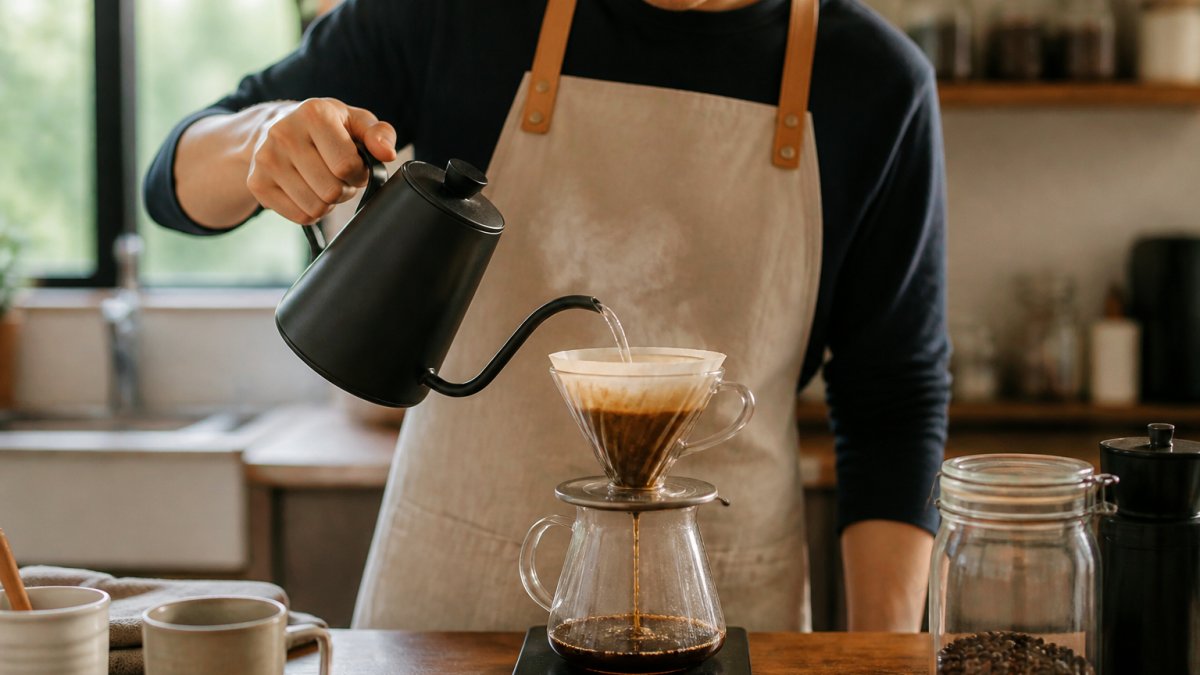
Here is the full method, step by step:
- Heat your water to 96°C. Use a gooseneck kettle for control.
- Weigh 20g of coffee and grind it medium-fine, like table salt.
- Rinse the filter with hot water to remove paper taste. Dump the rinse water.
- Add the grounds and place the dripper on your scale. Tare to zero.
- Bloom: pour 60g of water, wait 45 seconds. This releases trapped gas.
- First pour: add water to 160g in a slow spiral. Wait until the bed settles.
- Second pour: add water to 320g. Keep the water level steady.
- Let it drain. Total brew time should land near 2:45.
The bloom matters more with light roast coffee than any other roast level: fresh beans hold carbon dioxide that blocks water, and skipping it makes extraction uneven.
Method-Specific Starting Recipes for Light Roast
Pour-over is not the only way to brew light roast well.
| Method | Dose | Water | Grind | Temperature | Time | Key Adjustment |
|---|---|---|---|---|---|---|
| Pour-over (V60-style) | 20g | 320g | Medium-fine | 96°C | 2:30-3:00 | Slow the pour if the bed drains unevenly |
| French press | 30g | 500g | Medium-coarse | 96°C | 4:00 steep, then press | Stir once at 1:00, skim foam before pressing |
| AeroPress | 15g | 220g | Medium-fine | 92-96°C | 1:30-2:00 | Use a fine paper filter to keep the cup clean |
| Batch drip | 60g | 1,000g | Medium | 94-96°C | Machine-dependent | Preheat the carafe and brew a full batch for even extraction |
| Cold brew | 100g | 500g | Coarse | Cold | 12-16 hours | Use a tighter ratio than dark roast to avoid a thin concentrate |
French press. Light roast needs a slightly finer grind than dark roast, medium-coarse rather than coarse, because the dense bean resists extraction.
AeroPress. Forgiving and fast, AeroPress is a good entry point for light roast. Use 15g of medium-fine coffee to 220g of water at 92-96°C.
Cold brew. Light roast cold brew tastes thin at dark-roast ratios.
Not sure pour-over is your method? Our comparison of pour over vs French press breaks down how each one handles light roast flavor.
The Best Water Temperature for Light Roast Coffee
The best water temperature for light roast coffee is 93-96°C, higher than the 88-92°C range most guides suggest for dark roasts.
Light beans are less soluble, and heat speeds up extraction. Drop to 90°C and you taste it immediately: thin body, sharp acidity, no sweetness.
A few practical notes:
- No thermometer? Boil, then wait 30-45 seconds before pouring.
- Preheat your dripper so the water does not cool on contact.
- Keep it consistent. Small temperature swings change your cup more than you think.
Temperature and grind work as a pair: hotter lets you grind slightly coarser; cooler needs a finer grind.
Light Roast Coffee Grind Size: Finding the Right Setting
Light roast coffee grind size for pour-over should sit between medium-fine and medium, close to the texture of table salt. This finer setting makes up for the bean's density.
Grind consistency matters as much as grind size. A burr grinder produces even particles; a blade grinder mixes dust and boulders, so some grounds over-extract while others under-extract, giving a muddy, unpredictable cup.
Use this as your starting map:
| Brew Method | Grind Size | Why It Works for Light Roast |
|---|---|---|
| Pour-over | Medium-fine | Slower flow gives dense beans time to release flavor |
| Drip coffee | Medium | Machine timing needs a balanced particle size |
| French press | Medium-coarse | Long steep time offsets the coarser grind |
| Espresso | Fine | High pressure needs a tight, even bed |
| Cold brew | Coarse | Long extraction pulls flavor without bitterness |
Why Light Roast Coffee Tastes Sour (and How to Fix It)
Light roast coffee tastes sour when it is under-extracted: the water did not pull enough soluble material, so bright acids dominate and sweetness never shows up.
The fixes, in order of what to try first:
- Grind finer. This is the single most common fix for sour light roast.
- Raise the water temperature toward 96°C.
- Extend the brew time by slowing your pour.
There is a real difference between sourness and brightness. Brightness is clean, pleasant acidity, the kind in a good Ethiopia Natural; sourness is sharp and lingers on the sides of your tongue.
If your cup swings the other way, our guide on why your home coffee tastes bitter covers the over-extraction side of the same problem.
Water Chemistry, Freshness, and Other Details That Change Flavor
Water makes up most of your cup, so its mineral content changes what you taste. Very soft or distilled water produces a flat brew; very hard water mutes acidity and tastes chalky.
Freshness comes next. Coffee releases gas for days after roasting, and light roast coffee often peaks a few days off the roast. Too fresh can brew sour; too old goes flat.
Troubleshooting Your Light Roast Brew: A Systematic Guide
Work through problems in order instead of changing everything at once. Change one variable, brew again, and taste, that is how you build a recipe for your setup.
| Problem | Likely Cause | Fix |
|---|---|---|
| Sour, thin cup | Under-extraction | Grind finer or raise temperature |
| Bitter, dry finish | Over-extraction | Grind coarser or shorten brew time |
| Weak, watery body | Too little coffee | Tighten your brew ratio |
| Brew drains too fast | Grind too coarse | Grind finer, check filter |
| Brew stalls | Grind too fine or too much fines | Go coarser, pour slower |
| Flat, dull flavor | Stale beans or poor water | Check roast date, try filtered water |
Start with the grinder: grind size solves most light roast problems. Temperature is your second lever, ratio third. Touch only one at a time, or you will never know which change helped.
A Repeatable Dial-In Sequence
Use this sequence whenever you open a new bag of light roast. It turns taste into a measurable adjustment instead of a guess.
- Brew the baseline recipe. Use the pour-over recipe above: 20g coffee, 320g water, 96°C, medium-fine grind, 2:45 total time. Taste and note the result.
- Diagnose the dominant fault. Sour and thin points to under-extraction. Bitter and dry points to over-extraction. Weak and watery points to ratio. Flat and dull points to freshness or water.
- Change one variable by a measured step. For grind, move one click finer or coarser on a stepped grinder, or a small nudge on a stepless one. For temperature, move 2°C. For ratio, move 1 gram of coffee per 16 grams of water. For time, add or subtract 15 seconds.
- Brew again and compare side by side. Taste the new cup next to the old one if you can. If the fault improved, keep the change. If it got worse, revert and try the next lever.
- Stop when the cup is balanced. Sweetness should show up before acidity becomes sharp. Body should feel round rather than watery. The finish should be clean, not dry.
Mapping Taste to Cause
Sourness and bitterness are the two ends of the extraction spectrum, but not the only signals. Use this map to narrow the cause before changing anything.
- Sour, sharp, lingering on the sides of the tongue: under-extraction. Grind finer first, then raise temperature toward 96°C, then extend brew time.
- Bitter, dry, ashy finish: over-extraction. Grind coarser first, then lower temperature slightly, then shorten brew time.
- Weak, watery, no sweetness: ratio too loose. Tighten from 1:16 toward 1:15 and taste again.
Often one change fixes the dominant fault but reveals a smaller one underneath. That is normal, work through the sequence again from the top rather than changing two variables at once.
When to Change the Recipe vs. Change the Bean
Not every problem is a brewing problem. If the cup still tastes sour after the sequence, check the roast date.
Water is the other variable worth checking. Very soft or distilled water extracts poorly and tastes flat; very hard water mutes acidity. If your tap water tastes good, it is probably fine; if not, try filtered water before blaming the bean.
Conclusion
Brewing light roast coffee well comes down to a handful of choices: hotter water, a finer grind, a proper bloom, and fresh beans.
We built our light roasts for exactly this kind of brewing. Our Ethiopia Natural brings milk chocolate, fruit, and caramel from Sidama smallholder farms, and it rewards a careful pour-over.
Get started with Avrum Coffee and taste what a properly brewed light roast can do for your morning.
Frequently Asked Questions
How do you brew light roast coffee to bring out more flavor?
Use water just off the boil, around 93-96°C, and a slightly finer grind than you would for dark roast. Start with a 1:16 coffee-to-water ratio, bloom the grounds with twice their weight in water for 30-45 seconds, then pour in slow circles. Light roast beans are denser, so they need more heat and contact time to extract the floral and citrus notes that define them. Adjust one variable at a time and taste as you go.
What water temperature is best for light roast coffee?
The best water temperature for light roast coffee is generally 93-96°C. Light roasts are denser and less soluble than darker roasts, so near-boiling water helps pull out sweetness and acidity without scorching. If your coffee tastes sour and thin, try water at the higher end, around 96°C. If it tastes bitter or drying, drop to 93°C. A simple thermometer takes the guesswork out of this step.
Why does my light roast coffee taste sour?
Sourness in light roast coffee usually means under-extraction. The water did not pull enough soluble compounds from the grounds. Common causes include water that is too cool, a grind that is too coarse, a brew time that is too short, or a ratio with too little coffee. Try a finer grind, water closer to 96°C, or a longer contact time. Fix one variable at a time so you can taste what changed.
Should light roast coffee be ground finer than dark roast?
Yes, light roast coffee generally needs a finer grind than dark roast. Light beans are denser and hold up better to heat, so a finer grind increases surface area and helps water extract the flavor. For pour-over, start slightly finer than you would for a medium roast. For espresso, you may need to grind finer and adjust the dose to get a balanced yield. Always dial in by taste, not by the number on the grinder.
