

Table of Contents
- Why Coffee Prices Vary So Much
- What Is Specialty Grade Coffee and Why It Costs More
- How to Identify Fresh Roasted Coffee Beans
- Is Expensive Coffee Actually Better Quality? The Evidence
- How Expensive Coffee Compares Across Price Tiers
- Common Myths About Expensive Coffee Debunked
- How to Evaluate Coffee Quality Without Relying on Price
- Frequently Asked Questions
Last Updated: September 30, 2026
Why Coffee Prices Vary So Much
Walk down any supermarket coffee aisle and you'll see bags priced from a few dollars to over twenty. The gap isn't random. Coffee prices reflect a chain of costs: where the beans were grown, how they were processed, how quickly they were roasted and shipped, and how much marketing sits between the farm and your kitchen.
What Is Specialty Grade Coffee and Why It Costs More
Specialty grade coffee is coffee that scores 80 points or higher on the 100-point scale used by licensed Q graders, the industry's trained sensory evaluators. That threshold separates it from commodity coffee, which typically scores below 80 and is sold in bulk without traceability.
How to Identify Fresh Roasted Coffee Beans
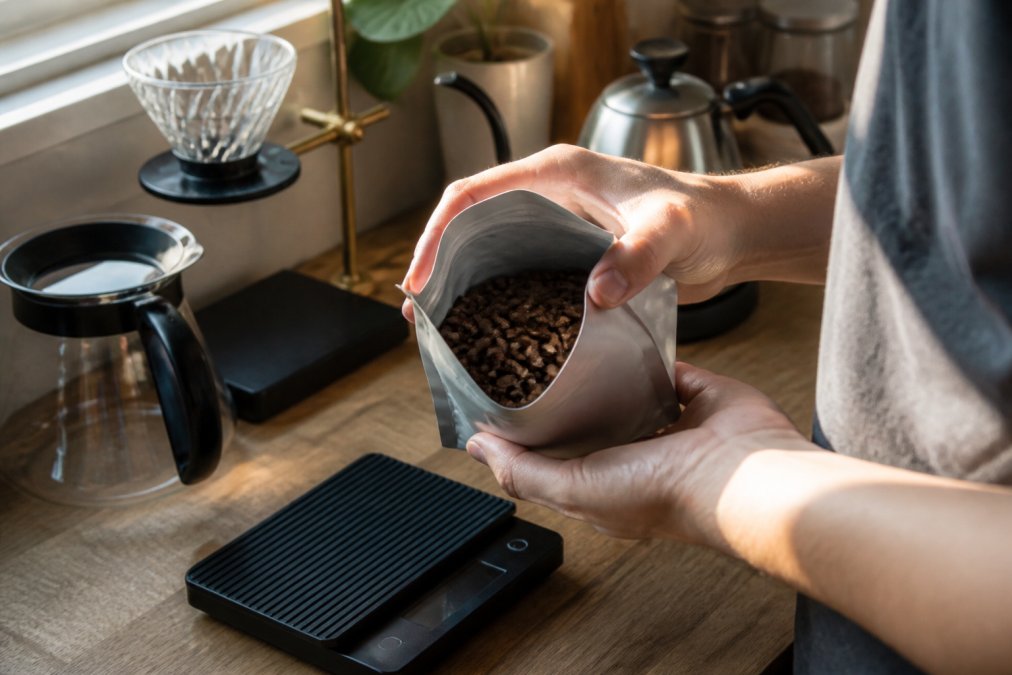
Freshness is the quality signal you can actually verify at home, and it matters more than most labels. Roasted coffee begins losing aroma and flavor within days of roasting as oxidation takes hold. Knowing how to identify fresh roasted coffee beans gives you a reliable way to judge quality without trusting the price tag.
Reading the Roast Date and Packaging
Look for a roast date, not a best-before date. A best-before stamp tells you nothing about when the beans were actually roasted, and it can sit on a bag for a year. A roast date is the only honest freshness marker.
Sensory Cues You Can Check at Home
You don't need a cupping table to assess freshness. Start with aroma: freshly roasted beans smell sweet and complex when you open the bag. Stale beans smell flat or papery.
Is Expensive Coffee Actually Better Quality? The Evidence
Here's the honest answer: expensive coffee is often better, but price alone doesn't guarantee quality. The relationship between cost and cup quality is real but imperfect, and it flattens out at a certain point. To move beyond opinion, you need to look at what actually drives quality, and where the price tag stops being a reliable signal.
What the Price Tag Actually Pays For
When you buy a bag of coffee, your money is split across several cost centers. Green coffee (the raw beans) typically accounts for 20-30% of the retail price for commodity coffee, but can rise to 50% or more for specialty lots with traceable origins. The rest goes to roasting, packaging, shipping, marketing, and retail margin. A higher price can reflect better beans, but it can also reflect heavier marketing, luxury packaging, or a famous farm name, none of which improve what's in the cup.
The Diminishing Returns Curve
Quality does tend to rise with price, up to a point. In commodity coffee (typically under $10 per 12 oz), you're getting blends designed for consistency and low cost, often with defects that are masked by dark roasting. As you move into the specialty range ($12-$20), you start seeing traceable origins, higher-altitude beans, and more careful processing. This is where the biggest quality jump happens.
Where Price and Quality Diverge
Price and quality split apart in two common scenarios. The first is the luxury markup, where you're paying for branding, rarity, or a story rather than measurable cup quality. The second is the stale premium, where genuinely excellent beans lose their advantage simply because they're old by the time they reach you. A $30 bag roasted six months ago will taste flatter than a $15 bag roasted last week.
The Middle-Market Sweet Spot
The best value in coffee usually sits in the middle of the price range, roughly $14 to $22 per 12 oz bag. This is where you find specialty-grade beans (80+ Q score) with real traceability, a recent roast date, and careful processing, without the luxury markup that comes from hype or scarcity.
How Expensive Coffee Compares Across Price Tiers
The clearest way to judge value is to compare what you actually get at each price level. The table below maps price tiers to the quality markers that matter most.
60 Pack Single Serve Coffee Capsules →
| Price Tier | Typical Quality Markers | Freshness Signals | Best For |
|---|---|---|---|
| Budget | Commodity blends, no origin detail | Rarely shows roast date | Everyday volume brewing |
| Mid-range | Specialty grade, traceable origin | Roast date on most bags | Home pour-over and drip |
| Premium | Single-origin, named farms | Roast date plus processing detail | Enthusiasts chasing specific notes |
| Luxury | Rare lots, heavy branding | Varies widely | Gifting and novelty |
Common Myths About Expensive Coffee Debunked
Several beliefs about expensive coffee don't survive scrutiny. Sorting them out helps you spend wisely.
- Myth: Higher price always means better beans. Price reflects branding, rarity, and packaging as much as cup quality. A traceable mid-range bag often beats a hyped luxury one.
- Myth: Dark roasts are stronger, so they're better. Roast level changes flavor, not caffeine content in any meaningful way. Darker roasts simply taste smokier and less acidic.
- Myth: Bitterness means good, bold coffee. Bitterness usually signals over-extraction or stale beans, not quality. Well-roasted coffee tastes sweet and balanced.
- Myth: Best-before dates indicate freshness. Only a roast date tells you when the beans were roasted. Best-before stamps can hide coffee that's months old.
- Myth: Expensive coffee is wasted on casual drinkers. Anyone who notices a burnt, bitter cup can benefit from fresher, better-sourced beans, whatever their experience level.
How to Evaluate Coffee Quality Without Relying on Price
Judging coffee on its own merits takes a simple, repeatable process. Most articles stop at 'look for a roast date', but to truly separate quality from price, you need a structured evaluation method. The good news: you can perform a simplified version of professional cupping at home with minimal equipment.
The Home Cupping Protocol
Professional Q graders use a standardized cupping method to score coffee. You can adapt it to your kitchen to compare beans objectively. Here's how:
- Set up your samples. Use the same amount of coffee (about 8.25 grams per 5 oz of water) for each bean you're comparing. Grind to a medium-coarse consistency, like sea salt.
- Smell the dry grounds. Note the aroma before adding water. Fresh coffee will smell sweet, fruity, or floral; stale coffee smells flat or papery.
- Pour hot water (just off boil, about 200°F) over the grounds. Let it steep for 4 minutes without stirring. A crust will form on top.
- Break the crust. After 4 minutes, use a spoon to push aside the crust and smell the released aromas. This is the most aromatic moment.
- Skim the surface. Remove the foam and floating grounds. Let the cup cool slightly.
- Slurp from a spoon. Slurping aerates the coffee and spreads it across your palate, maximizing flavor perception. Note sweetness, acidity, body, and any off-flavors.
- Evaluate as it cools. Flavors change as coffee cools, some defects become more apparent, while sweetness may emerge. Good coffee tastes pleasant at all temperatures.
What to Look For (and What to Ignore)
When evaluating, focus on these objective markers:
- Sweetness: Does the coffee taste naturally sweet, like caramel or fruit? This indicates ripe, well-processed beans.
- Acidity: Is it bright and lively (like citrus) or dull and flat? Bright acidity is a positive trait in specialty coffee.
- Body: Is the mouthfeel thin or rich? Body comes from the bean's density and roast level.
- Balance: Do the flavors work together, or does one dominate unpleasantly?
- Cleanliness: Is the finish free of off-flavors like rubber, cardboard, or ash? These indicate defects or staleness.
Ignore price, packaging, and marketing claims during the tasting. Your palate is the only judge that matters.
A Simple Scoring Sheet
To make comparisons concrete, score each coffee on a 1-5 scale for sweetness, acidity, body, balance, and cleanliness. Add the scores. A coffee that scores 20+ is excellent; 15-19 is good; below 15 suggests quality issues. This isn't a professional Q score, but it gives you a repeatable way to compare beans across price tiers.
Why This Matters More Than Price
The evidence points to a clear conclusion: expensive coffee is often better, but the price tag is a weak proxy for quality. Focus on freshness, traceability, and how the beans were handled, and you'll consistently find better cups without overpaying. For drinkers who want specialty-grade coffee roasted to order and shipped fresh, Avrum Coffee offers single-origin and blended options built around exactly those priorities. Browse the Coffee and Tea eStore to find a roast that fits your morning ritual, and let your own palate confirm what the label can only promise.
Frequently Asked Questions
Is expensive coffee always better quality than supermarket brands?
Not always. Price often reflects freshness, sourcing, and roast care, but some expensive coffee is mostly marketing. Supermarket beans may sit on shelves for months, so roast date matters more than price alone. A mid-priced bag roasted within the last two weeks usually beats a costly bag roasted six months ago. Check the roast date and origin details before assuming a higher price means a better cup.
What factors actually determine the quality of coffee beans?
Four things matter most: bean density and variety, processing method, roast date, and how the coffee is stored. Specialty grade coffee is scored for defects and flavor clarity. Freshness drives aroma and sweetness, while oxidation causes staleness. Water quality, grind consistency, and brew ratio also shape the final cup. Expensive coffee helps only when these other factors are handled well.
How does roast date affect the quality of coffee?
Roast date is the single clearest freshness signal. Coffee peaks roughly 7 to 10 days after roasting and fades within 4 to 6 weeks as oxidation sets in. Beans roasted months ago taste flat regardless of price. Look for a printed roast date, not just a best-before stamp, and buy from sellers who roast to order so the bag reaches you inside that window.
What is the difference between specialty grade and commercial grade coffee?
Specialty grade coffee scores 80 or above on the 100-point scale used by licensed graders, with no primary defects. Commercial grade falls below that threshold and often includes immature or damaged beans. Specialty beans are typically single-origin, traceable to a farm or region, and roasted in smaller batches. Commercial beans are blended for consistency and cost, which is why flavor can taste flat or bitter.
Are expensive coffee machines necessary for a better cup?
No. A consistent grind, fresh beans, and clean water matter more than machine price. A burr grinder and a simple pour-over or French press can produce a cup that rivals a cafe. Expensive machines add convenience and repeatability, but they cannot rescue stale or poorly roasted beans. Spend on freshness first, equipment second.