

Table of Contents
- What Single-Origin Coffee Actually Means
- Understanding Coffee Blends and Why Roasters Create Them
- Single-Origin Coffee Flavor: Distinctive Character vs Complexity
- Best Coffee Beans for Espresso: Single Origin or Blend?
- How to Choose Coffee Beans: Key Differences in Sourcing and Consistency
- Organic Single-Origin Coffee Online: Freshness, Traceability, and Sourcing
- Which Should You Choose? A Practical Decision Framework
- Frequently Asked Questions
Last Updated: October 10, 2026
What Single-Origin Coffee Actually Means
Single-origin coffee comes from one specific geographic location, farm, or cooperative. The comparison of single origin vs blended coffee reveals that single-origin lets you taste the distinctive character of where it was grown, while blended coffee combines beans from multiple origins.
The term "single-origin" can mean different things depending on how specific the roaster wants to be. Some roasters identify by country (Ethiopian coffee), others by region (Sidama Zone in Ethiopia), and the most detailed roasters specify the actual farm or cooperative that grew the beans. This traceability matters because it connects you directly to the growers and their practices.
At Avrum Coffee, we focus on sourcing single-origin beans that showcase each region's unique flavor profile. Our Brazil Santos, for example, comes from Fazenda Santa Barbara in the volcanic loam soils of Parana and Sao Paulo, which gives it that elegant, smooth cup with cocoa notes. Our Colombia comes from smallholder farmers in Medellin, delivering dried orange, berry, and chocolate characteristics that reflect the region's altitude and processing methods.
What makes single-origin coffee distinctive is its complexity and nuance. You're not drinking an averaged, balanced product. You're experiencing the terroir, the combination of altitude, soil type, climate, and processing method, that makes coffee from one place taste different from coffee grown elsewhere. A single-origin coffee from Tanzania will taste nothing like one from Costa Rica, even if both are medium roasts.
Understanding Coffee Blends and Why Roasters Create Them
A coffee blend combines beans from two or more origins. Roasters create blends deliberately, not by accident or to hide inferior beans. The goal is balance and consistency, something you can rely on tasting the same from one bag to the next.
Why blend at all? Single-origin coffees change with the seasons. The Ethiopia you loved in spring might taste different in autumn because harvest timing, weather, and processing shifts. Blends solve this problem by combining origins in proportions that maintain a consistent flavor profile throughout the year, regardless of what's available from each origin at any given moment.
Blends also let roasters create a specific taste experience that no single origin can deliver alone. A roaster might combine a bright, fruity bean with a chocolatey, full-bodied bean to create something that's both lively and smooth. The complementary flavors work together in ways that showcase the strengths of each component.
Avrum Coffee's 6 Bean Blend is a dark roast house blend created specifically for espresso. It's a meticulous combination of beans from around the world, designed to deliver consistent richness, body, and sweetness that cuts through milk in a cappuccino or stands bold on its own as a shot.
The trade-off is clarity. You lose the ability to taste the specific terroir of a single region. A blend is more about balance and harmony than distinctive character. That's not a weakness, it's a different goal entirely.
Single-Origin Coffee Flavor: Distinctive Character vs Complexity
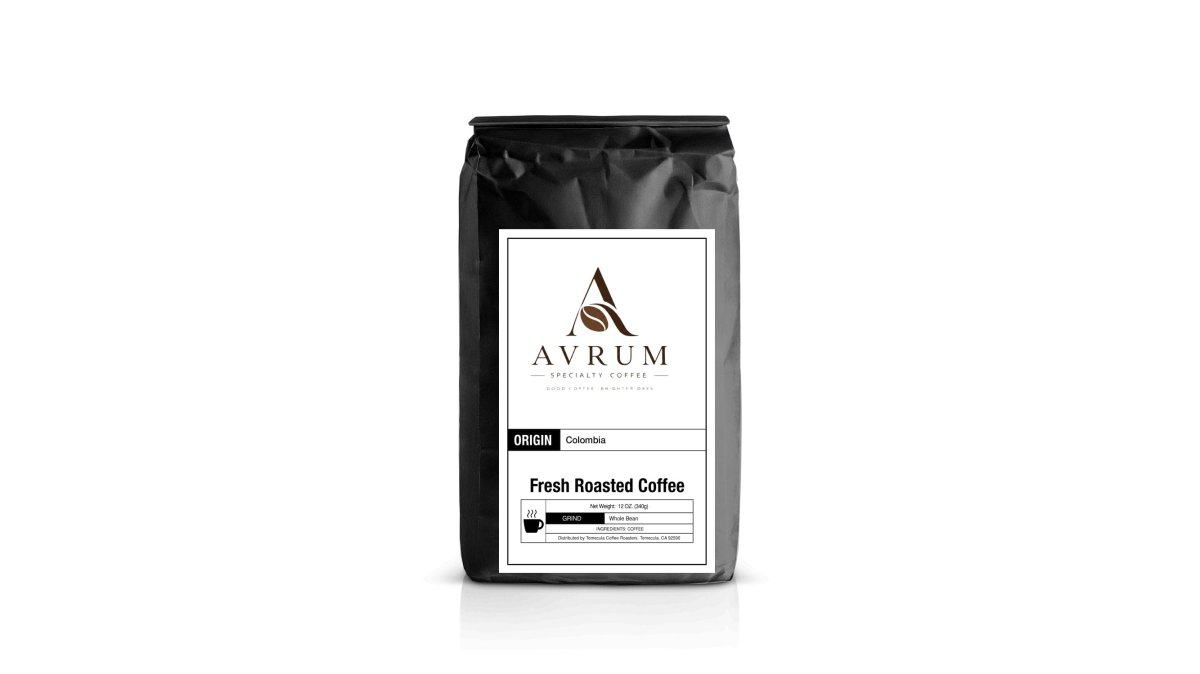
Single-origin coffee tastes more distinctive because you're tasting one place's story. A medium roast Colombia showcases dried orange, berry, and chocolate, flavors that come directly from the volcanic loam soils, altitude of 1300-1500 meters, and the fully washed, solar-dried processing method used by smallholder farmers in Medellin.
The complexity you find in single-origin beans comes from the specificity of place. Ethiopian beans from the Sidama Zone, grown at 1700-1900 meters elevation and processed as full natural (dried on raised beds), deliver milk chocolate, fruity, and caramel notes.

Blended coffee, by contrast, is engineered for balance. The flavors complement each other rather than stand out individually. You might taste sweetness and body and smoothness, but you won't taste the bright acidity of Ethiopian highlands or the spice notes of Honduran beans grown in clay minerals at high altitude. The blend averages those characteristics into something more uniform.
Neither approach is objectively better. Single-origin coffee rewards curiosity, each origin tastes different, and you can explore the world through flavor. Blends reward consistency and reliability. If you brew the same blend every morning, you know exactly what you're getting.
Best Coffee Beans for Espresso: Single Origin or Blend?
Espresso demands different things from coffee than filter brewing does. The intense pressure and rapid extraction of espresso highlight certain characteristics and soften others. For most espresso drinkers, blends have the edge.
Blended espresso beans are formulated with body and sweetness in mind. The combination of origins creates a full mouthfeel and balanced flavor that works well when shots are pulled into milk-based drinks like lattes and cappuccinos. Avrum Coffee's 6 Bean Blend is specifically designed for espresso, it's a dark roast that delivers the richness and consistency espresso demands.
Single-origin espressos work, but they're trickier. Some single origins pull beautifully as espresso and highlight their origin character in an exciting way. Others become thin, sour, or one-dimensional when subjected to espresso's extraction intensity. You need to know the bean and dial in your machine carefully.
If you're new to espresso or brewing at home without a lot of equipment, a blend is the safer choice. It's more forgiving. If you're an experienced espresso enthusiast who enjoys experimentation and has a grinder and machine you can dial in precisely, single-origin espresso can be rewarding, you might discover that a bright Ethiopian or fruity Colombian works beautifully in your setup.
The practical difference: blends give you consistency across drinks. Single-origin espresso gives you adventure and the chance to taste origin character in a concentrated form.
How to Choose Coffee Beans: Key Differences in Sourcing and Consistency
When deciding between single origin vs blended coffee, it comes down to what you value: distinctiveness or reliability.
Choose single-origin coffee if:
Single Origin Favorites Sample Pack →
- You want to taste the flavor of a specific region or farm
- You enjoy variety and exploring different origins seasonally
- You're brewing filter coffee (pour-over, French press, Aeropress)
- You have the patience to dial in brewing variables for each origin
- You're curious about coffee sourcing and want to support specific growers
Choose blended coffee if:
- You want the same taste experience every morning
- You're brewing espresso or milk-based drinks
- You value convenience and predictability
- You prefer a balanced, smooth cup over distinctive character
- You want coffee that's forgiving across different brewing methods
Sourcing matters for both. Single-origin coffee's traceability means you know exactly where your beans came from, the farm, the grower, the altitude, the processing method. This matters if you care about supporting specific farming practices or want to understand why your coffee tastes the way it does. Avrum Coffee's single-origin offerings include full details: our Colombia comes from smallholder farmers in Medellin using volcanic loam soils and solar-dried processing. That transparency lets you make informed choices.
Blended coffee's sourcing is less transparent by nature, you're buying a formula, not a story about one place. But quality blends are still sourced carefully. The roaster selects each component origin for specific qualities it contributes to the final blend.
Consistency differs too. Single-origin coffee's flavor varies slightly with harvest season and crop year. A 2026 Ethiopia might taste slightly different from 2025 Ethiopia. That's normal and part of the appeal for some drinkers. Blended coffee minimizes those variations by adjusting the proportions of each origin as availability changes.
| Factor | Single-Origin | Blended |
|---|---|---|
| Flavor Profile | Distinctive, region-specific | Balanced, consistent |
| Sourcing Transparency | High (farm/region identified) | Lower (formula-based) |
| Taste Variation | Seasonal changes expected | Minimized by design |
| Best Brewing Method | Filter coffee | Espresso, milk drinks |
| Freshness Window | 2-4 weeks post-roast | 2-4 weeks post-roast |
| Price Point | Typically higher | Moderate |
Organic Single-Origin Coffee Online: Freshness, Traceability, and Sourcing
When buying single-origin coffee online, freshness is critical. This matters more for single-origin coffee because you're paying for distinctive flavor, stale beans won't deliver it.
Check the roast date before you buy. Reputable roasters print it on the bag. If a retailer won't tell you when beans were roasted, that's a red flag. Avrum Coffee roasts fresh and ships quickly.
Traceability is easier to verify with single-origin coffee. You should be able to identify the specific farm, cooperative, or region, the altitude, the soil type, the variety of coffee plant, and the processing method. This information tells you about the coffee's origin and helps you understand its flavor. Our Brazil Santos, for example, comes from Fazenda Santa Barbara at 750-1050 meters elevation in volcanic loam soils, processed as pulped natural and sun-dried. That specificity matters.
Sourcing practices, how the coffee was grown and whether growers were treated fairly, matter to many coffee drinkers. Single-origin coffee's traceability makes it easier to learn about these practices. You can often find information about the cooperative or farm online, their farming methods, and whether they practice sustainable agriculture. Some single-origin coffees are certified organic, meaning they were grown without synthetic pesticides or fertilizers.
When buying online, look for:
- A specific roast date (not just "fresh")
- Detailed origin information (farm, region, altitude, processing)
- Information about the grower or cooperative
- A roaster that ships quickly after roasting
- Clear flavor notes that match the coffee's origin
Which Should You Choose? A Practical Decision Framework
The choice between single-origin and blended coffee depends on your brewing method, preferences, and what you value in your morning cup.
Start with your brewing method. If you brew filter coffee (pour-over, French press, Aeropress), single-origin beans let you taste origin character beautifully. If you pull espresso shots or make milk-based drinks regularly, blends are more forgiving and deliver better consistency.
Consider your commitment to consistency. If you want the same experience every morning without thinking about it, blended coffee is your answer.
Think about what you're paying for. Avrum Coffee's single-origin beans are priced at $24.99, while our 6 Bean Blend is also $24.99, both represent thoughtful sourcing and fresh roasting.
Try both. The best way to decide is to taste. Avrum Coffee's Single Origin Favorites Sample Pack includes six 2oz packs, Brazil Santos, Colombia, Costa Rica, Ethiopia, Honduras, and Tanzania, for $21.99. That's an affordable way to explore what single-origin coffee tastes like and discover which origins appeal to you.
Once you've explored, you can commit. Some drinkers end up with a rotation: a single-origin they brew most days for the distinctiveness, and a blend they keep on hand for when they want something familiar or they're making espresso drinks.
Choosing between single-origin and blended coffee isn't about one being objectively better, it's about matching the coffee to how you brew and what you value. At Avrum Coffee, we craft both carefully because we believe your morning ritual deserves coffee that's thoughtfully sourced and freshly roasted.
Frequently Asked Questions
What's the main difference between single-origin and blended coffee beans?
Single-origin coffee comes from one specific country, region, or farm, creating distinctive flavor profiles tied to that location's climate and soil. Blended coffee combines beans from multiple origins to achieve balanced, consistent flavor and complementary tastes. Single origins showcase unique character; blends prioritize harmony and uniformity from cup to cup.
Are single-origin coffees better for espresso than blends?
It depends on your preference. Blends are traditionally favored for espresso because their balanced body and complementary flavors create a smooth, full-bodied shot. However, single-origin espressos work beautifully if you enjoy more distinctive, pronounced flavors. Avrum's 6 Bean Blend is specifically crafted for espresso, while single origins like Brazil Santos offer a different but equally valid approach.
How do I know if single-origin coffee is actually fresh when ordering online?
Check the roast date on the bag before purchasing. When ordering organic single-origin coffee online, choose roasters who clearly display roast dates and ship quickly. Avrum's single-origin selections are freshly roasted and include full traceability information about growers and regions, so you know exactly where your coffee originates.
Should I choose single-origin or blended coffee for everyday drinking?
For everyday coffee, consider your priorities. Blends offer consistent flavor and balance day to day, making them reliable for a predictable morning ritual. Single origins provide variety and exploration, ideal if you enjoy tasting different regions and flavor notes. Many coffee enthusiasts rotate between both: blends for reliable comfort, single origins for discovery. Start with Avrum's Single Origin Favorites Sample Pack to explore six regions before committing.