

Last Updated: October 26, 2026
Quick Summary
High quality loose leaf tea begins with leaf integrity, showing whole leaves of consistent size and color when held to light, stored in opaque airtight containers to prevent degradation from light, air, heat, or moisture. Quality tea reveals complexity across multiple steepings, while poor tea flattens after the first infusion.
- Whole leaves with consistent color and minimal dust indicate higher grade material than broken pieces and fannings.
- The optimal window for consuming loose leaf tea is typically 6-12 months after harvest depending on storage conditions.
- Store loose leaf tea in opaque metal tins or glass jars with rubber seals kept in dark cupboards, avoiding clear containers and paper bags.
- Quality whole-leaf tea provides multiple good infusions, while budget tea gives you one decent cup.
- Evaluate tea by examining dry leaf appearance, aroma, liquor clarity, mouthfeel, aftertaste, and infusion count.
Table of Contents
- What Makes High Quality Loose Leaf Tea Different
- Visual Inspection: Reading the Dry Leaf
- Understanding Tea Grading Systems Explained
- Origin, Terroir, and Single-Origin vs. Blended Tea
- Evaluating Aroma and Flavor Profile
- How to Store Loose Leaf Tea for Maximum Freshness
- The Loose Leaf Tea Brewing Guide for Different Types
- Building Your Sensory Evaluation Rubric
- Frequently Asked Questions
What Makes High Quality Loose Leaf Tea Different
High quality loose leaf tea begins with leaf integrity. Explore best organic loose leaf tea brands that exemplify these quality principles.
Visual Inspection: Reading the Dry Leaf
Before you steep, examine what you're about to brew.
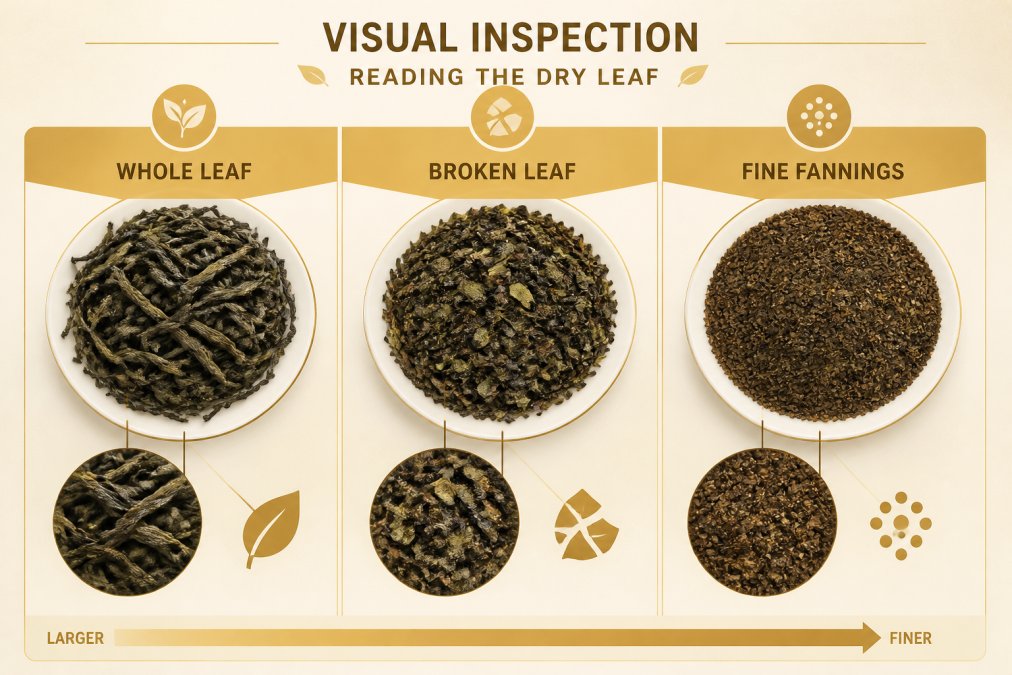
Whole Leaf vs. Broken Leaf and Fannings
The visual test is simple: hold a handful of dry tea up to light. Whole leaves should show consistent size and structure; broken pieces and dust indicate lower grade material.
Leaf Integrity and Color Consistency
Color consistency also reveals storage conditions: faded patches mean exposure to light or air. Quality producers use opaque, airtight containers from harvest through shipping.
Understanding Tea Grading Systems Explained
When evaluating tea grading systems explained in marketing materials, look past the acronym. Ask about harvest date, processing method, and storage conditions, which matter more than the grade letter.
Origin, Terroir, and Single-Origin vs. Blended Tea
Our English Breakfast blend combines African and Indian tea for a rustic, sweet cup that stands up to milk and sugar.

Flush Timing and Harvest Date Impact
The optimal window for consuming loose leaf tea is typically 6-12 months after harvest, depending on storage. Browse the full Single Origin collection to select teas based on these criteria. After that it doesn't spoil, but it flattens.
Evaluating Aroma and Flavor Profile
Our Jasmine green tea pairs hand-picked jasmine blossoms with green tea to create a medium-bodied, sweet, smooth cup.

How to Store Loose Leaf Tea for Maximum Freshness
Storage conditions determine how long your tea maintains quality. Tea degrades when exposed to light, air, heat, or moisture. Store loose leaf tea in airtight containers away from direct sunlight: opaque metal tins are ideal, glass jars with rubber seals work if kept in a dark cupboard, and clear containers or paper bags should be avoided.
The Loose Leaf Tea Brewing Guide for Different Types
Brewing is where knowledge becomes practice. The same tea brewed two different ways tastes completely different. Temperature, steeping time, and water quality all influence the result. This is also where you discover why high quality loose leaf tea deserves attention, good tea reveals complexity across multiple steepings, while poor tea flattens after the first infusion.
Black, Green, Oolong, and White Tea Brewing Differences
Our Earl Grey is brewed at 195°F for 5-10 minutes, allowing the Ceylon black tea and bergamot to develop fully without bitterness.

Water Chemistry and Steeping Time
Multiple infusions are a feature of quality tea. After the first steep, pour off the water completely, add fresh hot water, and steep again. The second and third infusions often taste different, sometimes better, than the first. This is why whole-leaf tea justifies the cost: budget tea gives you one decent cup, quality tea gives you four.
Building Your Sensory Evaluation Rubric
At Avrum Coffee, we've curated a collection of premium teas, from our Matcha crafted for traditional preparation to our Masala Chai with full-bodied, aromatic intensity, designed to reward this kind of attention.
| Evaluation Dimension | What to Look For | Quality Indicator |
|---|---|---|
| Dry Leaf Appearance | Whole leaves, consistent color, minimal dust | Uniform size and vibrant hue |
| Aroma (Dry) | Clear, distinct scent without mustiness | Fresh, inviting, specific character |
| Liquor Clarity | Bright color, no cloudiness | Clear, bright infusion |
| Mouthfeel | Smooth texture, pleasant coating | Balanced astringency, not harsh |
| Aftertaste | Lingering pleasant finish | Flavor persists after swallowing |
| Infusion Count | Multiple quality steepings possible | 3+ good infusions from one portion |
| Storage Condition | Airtight, dark, cool, dry environment | Maintained freshness over months |
Frequently Asked Questions
What's the difference between loose leaf and tea bags?
How do I know if tea is fresh?
Can I reuse loose leaf tea?
Should I buy single-origin or blended tea?
What water temperature should I use?
External Sources for Further Reading
According to the Specialty Tea Institute, proper leaf grading and storage significantly impact flavor retention and the number of quality infusions possible from whole-leaf tea.
Research on tea chemistry from the Journal of Agricultural and Food Chemistry demonstrates that oxidation levels and processing methods directly influence the concentration of flavor compounds and antioxidants in brewed tea.
The International Standards Organization tea classification standards provide the technical framework that producers use to grade and describe loose leaf tea quality across global markets.
Frequently Asked Questions
What visual signs indicate high-quality loose leaf tea?
High quality loose leaf tea displays whole, intact leaves with consistent color and minimal dust or broken pieces. The dry leaf appearance should be vibrant and uniform, whether deep green, dark brown, or oxidized oolong tones. Avoid tea with a dull, grayish hue or excessive fannings, which indicate lower grades. A strong, clean aroma when you open the package signals freshness and proper storage. Single-origin teas often show visible variation in leaf size and color, which reflects natural processing rather than over-sorting.
How does processing method affect tea quality and flavor?
Processing method determines oxidation levels, which fundamentally shape the tea's character. Black teas undergo full oxidation for bold, malty notes and high astringency. Green teas skip oxidation, preserving grassy, floral qualities and lighter body. Oolong sits between, offering complex fruity and toasty profiles. White teas use minimal processing to retain delicate, subtle flavors. The specific technique, whether leaves are rolled, twisted, or flat-dried, also affects infusion rate and how many steepings the tea yields. Premium producers control every step to maximize terroir expression and consistency.
Why is loose leaf tea considered superior to tea bags?
Loose leaf tea uses whole or large broken leaves that unfurl fully during steeping, releasing flavor compounds gradually and consistently. Tea bags typically contain fannings and dust, which steep too quickly, often resulting in bitter, over-extracted liquor. Loose leaf allows multiple infusions from the same leaves, delivering fresh flavor with each steep. The larger surface area and room to expand means better extraction and control over steeping time. Premium loose leaf also comes from higher grades, whereas most tea bags use commodity-grade material. For quality-focused drinkers, loose leaf delivers noticeably smoother, more nuanced cups.
What are the best storage practices to maintain tea freshness?
Store loose leaf tea in an airtight container away from light, heat, and strong odors. Glass jars with tight seals or opaque canisters work well; avoid clear containers that expose tea to UV light, which degrades flavor and aroma. Keep tea in a cool, dry place, not above the stove or near windows. Moisture content should stay low; humidity causes mold and staleness. Separate different tea types to prevent flavor transfer. Most loose leaf tea stays fresh for 6-12 months in proper conditions, though premium single-origin teas are best consumed within 6 months of the harvest date for optimal aroma and mouthfeel.
How do I distinguish between single-origin and blended teas?
Single-origin teas come from one specific region or estate, clearly labeled with the source, for example, Darjeeling, Sencha, or Ceylon. These teas reflect terroir, showing how soil, altitude, and climate shape flavor. Blended teas combine leaves from multiple origins or types, often to achieve consistency or create signature flavor profiles like English Breakfast or Masala Chai. Check the package label; single-origin teas list their specific region and often the harvest date or flush. Blended teas list their component types. Single-origin typically costs more and offers complexity; blends provide accessibility and balanced flavor designed for everyday drinking or pairing with milk and sugar.
Does harvest season impact the flavor profile of tea?
Yes, significantly. The first flush, harvested in spring, produces delicate, floral, and grassy notes with lighter body and higher price. Second flush, picked in early summer, develops fruitier, more complex flavors with increased astringency and body. Third flush and autumn harvests yield earthier, toastier, and sometimes honey-like notes with deeper oxidation. Growing conditions during each season, temperature, rainfall, and sunlight, influence leaf chemistry and final taste. Premium tea producers often specify flush on the label because knowledgeable drinkers seek particular seasonal profiles. Understanding flush timing helps you choose tea that matches your flavor preference and brewing style.
How do I know if my loose leaf tea is fresh or stale?
Fresh loose leaf tea has a strong, clean aroma when you open the package, floral, fruity, earthy, or toasty depending on type. Stale tea smells muted, flat, or musty. Visually, fresh tea shows vibrant color; stale tea appears dull or faded. During brewing, fresh tea releases bright liquor clarity and full flavor within the first steep; stale tea produces weak, thin infusion even with proper water temperature and steeping time. Check the harvest date if available; tea is best within 6-12 months depending on storage. Buy from retailers with high turnover and ask roast or harvest dates. Proper storage in airtight containers away from light preserves freshness far longer than tea bags or loose leaf left in open containers.
What role does water chemistry play in brewing high quality loose leaf tea?
Water chemistry dramatically affects extraction and final cup quality. Hard water with high mineral content can mask delicate floral and fruity notes, while soft water may over-extract tannins, creating excessive astringency. Ideally, use filtered water with moderate mineral content, around 50-100 ppm total dissolved solids. Water temperature must match tea type: green and white teas need 160-180°F to avoid bitterness; black and oolong teas thrive at 195-212°F. Chlorinated tap water can introduce off-flavors; letting water sit or using a filter removes chlorine. Consistent water quality ensures you taste the tea's true terroir and processing character rather than fighting mineral or chemical interference.
