

Last Updated: October 28, 2026
Quick Summary
The best coffee accessories for travel depend on how you travel: an insulated mug and kettle suit road trips, while capsules or instant coffee fit flights and backpacking. Pick a sealed coffee format, a reliable hot-water source, and a vessel that matches your trip, and skip anything you won't use.
- Identify your hot-water source before packing a brewer that needs heat.
- Choose oxygen-free sealed capsules when storage conditions are hard to control.
- A hand grinder suits road trips and hotels with no power constraints.
- Pack only the beans you need plus one spare day to limit staleness.
- Enamel mugs must stay away from direct heat unless designed for it.
Table of Contents
- Best Portable Coffee Makers for Travel
- Travel Coffee Kit Essentials: What to Pack
- Portable Coffee Grinder for Travel: Is It Worth the Weight?
- How to Keep Coffee Fresh While Traveling
- Choosing Accessories by Travel Style
- Building Your Travel Coffee Kit Before Your Next Trip
- Frequently Asked Questions
Most travellers treat coffee as an afterthought, grabbing whatever is cheapest at the airport kiosk. A good travel coffee setup can make a hotel room or campsite feel like home. The right coffee accessories for travel enthusiasts can turn a rushed brew into a ritual you look forward to.
Coffee loses its character quickly once roasted and exposed to air, and your setup decides how much reaches your cup on day five of a trip. Pack the wrong gear and you get weak, bitter or stale coffee; pack the right kit and each cup tastes close to home.
Match your accessories to how you travel, not to what looks impressive online: a weekend road trip, a backpacking route and a business trip each call for different tools.
Best Portable Coffee Makers for Travel
A portable coffee maker is the centrepiece of most travel setups. Pour-over and immersion brewers are the most compact; espresso-style machines deliver a stronger shot but need more power and space.
Our travel mug with a handle holds 25 oz (739 ml), is stainless steel with a plastic press-in lid, and fits most car cup holders.

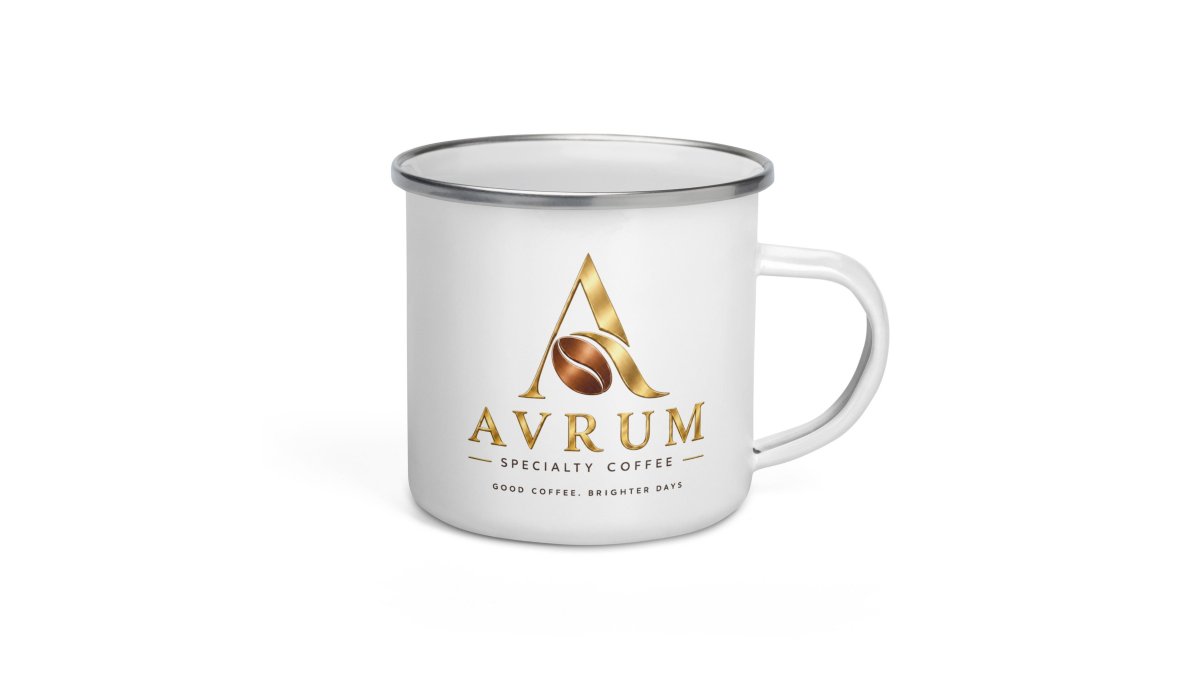
The enamel mug is lightweight and durable. It is hand-wash only.
Our 12 pack single serve coffee capsules are sealed without oxygen, and an improved filter design absorbs more grounds without slowing the brew. Our instant coffee comes as 30 servings in a resealable pouch.

Our cold brew coffee is a dark French roast with very coarse grounds, specifically blended for cold brew, and contains no additives.
| Option | Best For | Packed Size | Power Needed |
|---|---|---|---|
| Insulated travel mug | Road trips, commuting | Medium | None |
| Enamel mug | Camping, hiking | Small, light | None (heat over fire or stove) |
| Single-serve capsules | Hotel rooms, flights | Very small | Hot water source |
| Instant coffee pouch | Backpacking, emergencies | Very small | Hot water source |
| Cold brew coffee | Hot climates, long days | Small | None |
Watch out: keep heat sources away from enamel mugs unless the product is designed for it.
Travel Coffee Kit Essentials: What to Pack
A coffee kit is more than a brewer: it is a coordinated system of vessel, coffee format, water-heating method, grinding option, scale or scoop, filtration, storage and cleaning kit. Most travel coffee failures trace back to a missing accessory, not a bad brewer.
Here is a checklist organized by function.

The complete travel coffee accessory checklist
1. Vessel and drinking cup
- An insulated travel mug with a locking, spill-proof lid for road trips and commutes: double-wall stainless steel, a gasket-sealed lid, and a base that fits a car cup holder. Hand-wash models are common; check the care instructions.
- A lightweight second cup (enamel or collapsible silicone) for sharing. Enamel is durable but stains; silicone collapses flat but holds heat poorly.
2. Coffee format
- Whole beans if you carry a grinder and have space.
- Pre-ground in a sealed, one-way-valve bag if you want freshness without a grinder.
- Single-serve capsules or sticks if hot water is your only reliable resource. Sealed, oxygen-free formats protect flavor best when you cannot control storage conditions.
3. Water-heating method
- A compact electric kettle for hotel rooms and road trips with power.
- A camping stove or jetboil-style burner for campsites and backpacking.
- A power-free fallback: hot water from a tap, a thermos pre-filled at a café, or a hotel breakfast station. Identify your hot-water source before packing a brewer that needs one.
4. Grinding option (optional)
- A hand grinder if you carry whole beans and have space. See the grinder section below for the trade-offs.
- Skip the grinder if you fly carry-on only or backpack with a strict weight limit; buy pre-ground in a sealed format instead.
5. Measuring and ratio tools
- A compact digital scale (many pocket models weigh under 200 g) if you care about consistency.
- A scoop that doubles as a bag clip to save weight. Start around 1:15 to 1:17 coffee to water by weight; adjust to taste.
6. Filtration
- Paper filters matched to your brewer (cone, flat-bottom, or press style). Carry a few spares in a zip bag.
- A reusable metal or cloth filter if you want to avoid disposables. Metal filters let more oils through and change the cup; cloth needs rinsing and drying to avoid sourness.
7. Storage
- An airtight, opaque container for beans or grounds. Light and heat degrade coffee faster than time alone.
- A small zip pouch or hard case for capsules and filters so they do not crush in a bag.
8. Cleaning and maintenance
- A small microfiber cloth or travel sponge.
- A lemon-juice or baking-soda sachet for enamel stains.
- A collapsible brush for grinder burrs and brewer corners.
How the pieces fit together
Compatibility matters more than individual product quality. A brewer that takes a proprietary capsule is useless if you cannot buy refills on the road. A grinder that produces a grind too fine for your press or too coarse for your pour-over wastes the beans you carried. Before you pack, confirm:
- Your filters match your brewer's shape and size.
- Your grinder's grind range covers the brew method you plan to use.
- Your storage container fits inside your bag without crushing.
- Your heating method can actually reach brewing temperature where you are going.
Frequent travelers often settle on a modular kit: one core brewer, one coffee format, one heating method, and a small pouch of cleaning and measuring tools. Everything else should earn its place by weight.
What to leave at home
- A full-size grinder unless you are driving and have power.
- A glass pour-over server; it is fragile and heavy.
- Multiple brewers for one trip. Pick one method and master it.
- Large bags of beans you will not finish; carry only what you need plus one spare day.
This is also where travel style starts to matter. A car trip can carry a full kit with a kettle, grinder, and scale. A flight cannot. The next section breaks the kit down by how you travel.
Portable Coffee Grinder for Travel: Is It Worth the Weight?
The real question is not whether a grinder improves flavor, it does, but whether the improvement survives the constraints of your trip. Here is how to make that call.
Hand grinder vs. electric grinder
Hand grinders are the travel default because they need no power. Most use conical burrs, which produce a more consistent grind than blade grinders, and range from under 300 g to about 700 g. The trade-offs:
- Weight and packability: A hand grinder is a solid cylinder that takes up bag space and does not collapse. Check the packed dimensions, not just the weight.
- Effort: Grinding by hand takes time and forearm work, especially for fine espresso grinds. Coarse grinds for press or cold brew are faster.
- Noise: Manual grinding is quieter than electric but not silent; a crowded hostel or campsite at dawn will notice.
- Cleaning: Burrs need brushing between uses to avoid stale oils building up.
Electric grinders are faster and more consistent but need power. A small electric burr grinder is practical for road trips, hotel stays and rentals with outlets, but plug and voltage mismatches usually rule it out for backpacking, flights and international travel. Battery-powered models add charging logistics and often compromise consistency.
Grind consistency and brew method
A grinder's value depends on matching the grind to your brewer:
- Coarse for press and cold brew. A blade grinder can approximate this, but the particle spread will be wide.
- Medium for most pour-over and drip. A burr grinder is a real advantage here.
- Fine for espresso-style brewing. Hand grinders can do it, but it takes effort and time.
If you drink press or cold brew on the road, a budget hand grinder is often enough. If you want pour-over clarity, a burr grinder with adjustable settings matters more.
The weight math
A useful rule: if the grinder will sit unused on half your trips, leave it at home. You can grind fresh on arrival if your accommodation has the space and power.
A practical decision path
- Backpacking or carry-on only: Skip the grinder. Carry pre-ground in a sealed format or capsules.
- Road trip or hotel with outlets: A hand grinder or compact electric burr grinder is worth the weight.
- International travel: Check voltage and plug compatibility before packing an electric grinder; a hand grinder avoids the issue entirely.
- Group camping: One grinder shared among the group is more efficient than several small ones.
How to Keep Coffee Fresh While Traveling
Freshness is where most travel coffee goes wrong. Coffee degrades through air, heat, light and moisture, and travel exposes beans to all four at once, so protection matters more on the road.
Store beans or grounds in an airtight container, out of direct sun and away from hot car dashboards. Sealed formats like the oxygen-free capsules above give the most protection with the least effort. If you buy beans to carry, check the roast date before packing them. Learn how to judge whether beans are truly freshly roasted.
Practical tips:
- Pack only what you need for the trip, plus one spare day
- Reseal bags tightly after every use and press out the air
- Avoid leaving beans in a hot car or a sunny windowsill
- Keep moisture away: a damp cup or a wet spoon speeds spoilage
Choosing Accessories by Travel Style
Your travel style should decide your kit:
- Road trips: A full insulated mug, a manual or electric grinder if you have power, and a kettle or stove. Weight is less of a concern.
- Backpacking and hiking: Enamel mug, instant coffee or capsules, and a minimal cleaning kit. Every gram counts.
- Flying or business travel: Single-serve capsules and a sealed travel mug. Liquids restrictions usually apply to the coffee itself, so check your airline's rules before you fly with ground coffee in a large container.
- International travel: Single-serve formats are the most reliable. Electrical plugs and voltage vary, so a plug-free option saves frustration.
- Camping with a group: One larger kettle or pot, a few enamel mugs, and a shared supply of ground or instant coffee.
Knowing your style means packing for the trips you actually take, not hypothetical ones.
Building Your Travel Coffee Kit Before Your Next Trip
Start by listing your next trip: how long it is, how you get there, and where you will have hot water. Then work through the checklist and cut anything you will not use.
Begin with the vessel, the coffee format and the cleaning kit, and add a grinder only if your trip allows it.
A complete kit does not need to be expensive or heavy. It needs to match the trips you take. Start small, notice what you actually reach for, and build from there.
When you are ready to fill your bag, explore our beans and choose the setup that fits how you travel.
Frequently Asked Questions
What coffee accessories are best for traveling?
The stainless steel travel mug has a spill-proof plastic lid and fits most car cup holders. The enamel mug is lightweight and durable. The travel mug is hand-wash only, and the enamel mug is hand-wash only.
What should I pack in a travel coffee kit?
The stainless travel mug is hand-wash only, and the enamel mug is hand-wash only and should not be heated directly, since that can damage its coating. The enamel mug can stain with certain beverages, including coffee and tea; the listing says stains can be removed with lemon juice or soda and a hard sponge.
How do you keep coffee fresh while traveling?
The single-serve capsules are sealed with no oxygen inside. The instant coffee comes in a resealable pouch. Before placing a hot drink in the travel mug, open the lid to prevent steam pressure buildup.
